What Is K18 and Why Is Everyone Talking About It?
K18 is a biotechnology haircare brand built around a single patented molecule: the K18Peptide™. Unlike traditional leave-in conditioner treatments that coat the outside of the hair strand with moisture or silicone, K18 penetrates into the innermost layer of the hair cortex — the same layer where chemical and heat damage actually occurs.
When your hair is bleached, permed, relaxed, or frequently heat-styled, it breaks the disulfide bonds that hold the hair's keratin chains together. This is what causes frizz, breakage, loss of elasticity, and that rough, straw-like texture many Filipinas know after a bleach or rebond session. K18's bioactive peptides find those broken chains and reconnect them — a process the brand calls biomimetic hair science.
The result? Hair that behaves and feels closer to its natural, undamaged state — stronger, more elastic, smoother, and noticeably softer — even after the very first use.
Is K18 a Conditioner, a Mask, or Something Else?
This is the most common first-timer question. K18 is technically a leave-in treatment, but it functions more like a molecular repair serum than a moisturising mask. It doesn't add hydration in the traditional sense — it restores the hair's internal structure so the hair can retain moisture and behave normally again.
Think of it this way: a conditioner smooths the outside of a damaged hair strand. K18 rebuilds the inside. They do different jobs, and K18 is not a replacement for your regular conditioner — it's a treatment that goes on instead of conditioner on wash days when you're using it.
Who Needs K18? Identifying the Right Hair Type
If you're wondering whether your hair actually needs K18, start by asking yourself if any of the following apply:
- You've had your hair bleached, highlighted, or color-treated
- You've had a rebond, keratin treatment, perm, or relaxer
- You use heat styling tools (flat irons, curling wands, blow dryers) regularly
- Your hair feels dry, brittle, or breaks easily even when wet
- Your hair has lost elasticity — it snaps instead of stretching when pulled gently
- Your ends feel rough or look "fried" no matter how much conditioner you use

Not sure if your hair is actually damaged? Try our guide: 4 Easy Ways to Test For Damaged Hair At Home.
K18 is formulated to work on all hair types — straight, wavy, curly, coily, fine, thick, and everything in between. It's particularly effective for the hair concerns most common in the Philippines: post-rebond brittleness, bleach damage, and hair that's been through multiple chemical processes.
The K18PEPTIDE™ — The Science, Simplified
You don't need to be a biochemist to understand why K18 works. Here's the short version:
Healthy hair is made of keratin protein chains held together by disulfide bonds — think of them like the rungs of a ladder. Chemical treatments (bleach, relaxers, perms) and extreme heat snap those rungs. Once broken, traditional conditioners can't reconnect them — they can only temporarily fill in the gaps on the surface.
The K18Peptide™ is small enough to travel into the hair cortex (the inner structure) and re-lock onto those broken sites. The precise term matters here: K18 reconnects the broken polypeptide chains themselves — the keratin backbone of the hair — and, as a result, also reconnects the disulfide bonds that brace that backbone. That is why K18 describes the repair as working along both the length and the width of the strand. It's a one-way repair: once a chain is reconnected, it stays reconnected through shampoos and styling.
Just as important is what K18 is not: it is not a coating. Regular masks and deep conditioners deposit film-formers on the outside of the shaft — they smooth the cuticle and add slip, and the effect washes out with your next shampoo. K18 leaves no film behind. The change happens inside the cortex, which is why the results survive washing instead of rinsing away, and why hair doesn't get the heavy, coated feel that buildup-prone hair types dread.
Clinical studies behind the K18 formula show measurable improvement in:
- Elasticity — hair stretches without snapping
- Strength — reduction in breakage
- Smoothness — cuticle lies flat, reducing frizz
- Softness — hair feels like itself again
How to Use K18 Leave-In Molecular Repair Hair Mask: Step by Step
This is the section most people come here for. Follow these six steps exactly on your first use — especially the timing:
Step 1 — Shampoo Only (No Conditioner)
Wash your hair with a clarifying shampoo or your regular shampoo. Skip the conditioner entirely on days you use K18. Conditioner coats the hair shaft and can block the K18Peptide™ from penetrating. If your hair is heavy with product buildup, use a detox or clarifying shampoo for best results — a clean starting point allows K18 to work most effectively.
Step 2 — Towel-Dry to Damp
Gently squeeze excess water from your hair. Your hair should be damp but not dripping — wet hair dilutes the product. Wrap in a towel briefly, then detangle gently before applying.
Step 3 — Measure Your Dose
K18 is a concentrated treatment — a little goes a long way. Use this as your dosage guide:

| Hair Length | Recommended Amount |
|---|---|
| Short (above ears) | 1 pump / pea-sized amount |
| Medium (chin to shoulder) | 1–2 pumps |
| Long (shoulder to mid-back) | 2 pumps |
| Extra long / very thick | 2–3 pumps |
If your hair is severely damaged, you may need slightly more on the first few uses. Start conservative — you can always add more.
Step 4 — Apply Ends to Roots
Emulsify the product in your palms first, then apply from the ends of your hair upward toward the roots. This is the opposite of how many treatments are applied. Focus on the most damaged sections first (usually the ends and mid-lengths), and work the product through so every strand is coated.

Step 5 — Wait Exactly 4 Minutes
Set a timer. This step is non-negotiable. The K18Peptide™ needs a full 4 minutes to penetrate the hair cortex and initiate the bonding process. Do not rinse, add other products, or start blow-drying during this window. Just wait.
Step 6 — Style as Usual. Do NOT Rinse.
After 4 minutes, proceed with your normal styling routine — blow-dry, diffuse, air-dry, whatever you prefer. Apply any heat protectant for hair or styling products after the 4-minute wait, on top of the K18. The mask stays in your hair permanently — it does not need to be rinsed out.
K18 Dos and Don'ts
The biggest mistakes first-time users make usually come from skipping a step or misunderstanding how K18 is different from their usual treatments. Here's the quick checklist:
DO:
- ✅ Use on clean hair — shampoo first, every time
- ✅ Use a clarifying shampoo before K18 if you're a heavy product user or it's your first time
- ✅ Wait the full 4 minutes before touching or styling
- ✅ Use K18 for 4–6 consecutive washes during your initial repair phase for progressive results
- ✅ Apply to towel-dried, damp hair — not soaking wet
- ✅ Follow up with the K18 Molecular Repair Hair Oil after styling for added shine and frizz control
DON'T:
- ❌ Apply conditioner before K18 on the same wash
- ❌ Rinse K18 out — it's leave-in by design
- ❌ Use on soaking-wet hair straight from the shower
- ❌ Apply to dry hair
- ❌ Skip the 4-minute wait and go straight to styling
How Many Times Do You Need to Use K18 for Results?
This is where many first-timers get confused. K18 works progressively — the more broken bonds it repairs over multiple washes, the more dramatic the cumulative result.
Phase 1 — Initial Repair (First 4–6 Washes): Use K18 every single wash. Each application deepens the repair as more broken peptide chains are reconnected. Heavily damaged hair (multiple bleach rounds, years of heat damage) may need the full 6 washes before peak results are visible.
Phase 2 — Maintenance: Once your hair has completed the initial repair phase, switch to using K18 every 3–4 washes to maintain results and address new damage as it occurs.
Here's the realistic wash-by-wash timeline. After wash 1, hair usually feels softer and smoother — real, but the smallest part of the repair. By washes 2–3, the structural change shows up: better elasticity, less snapping when you brush wet hair, easier detangling. By washes 4–6, hair that previously felt brittle or gummy typically stretches without breaking and holds a style again. Don't judge K18 on a single use — the payoff compounds across the reset phase, and the most damaged hair shows the biggest difference last.
K18 for Specific Filipino Hair Concerns
After Bleaching or Hair Color
Bleach causes the most severe molecular damage — it aggressively breaks disulfide bonds to lift color from the hair shaft. K18 is one of the most effective at-home treatments for post-bleach repair because it specifically targets those broken bond sites. Start the K18 protocol on your very next wash after bleaching.
After Rebonding or Chemical Straightening
Rebonding uses strong chemical agents to break and reset the hair's bonds into a straight position. The result is structurally weaker hair prone to brittleness and breakage — especially in the weeks after the service. K18 is safe to use post-rebond and helps restore the hair's internal integrity without undoing the straightening effect.
For Regularly Heat-Styled Hair
Daily flat iron or blow-dryer use causes cumulative heat damage that strips moisture and degrades the keratin structure over time. If your hair falls in the damaged hair collection category — rough, dull, snapping easily — K18 used every 3–4 washes during maintenance phase provides an ongoing repair scaffold against continued heat use.
K18 vs. Bond-Builders: What's the Difference?
K18 usually gets compared to two names HairMNL customers already know: Olaplex No.3 PLUS (₱2,350) and the Kérastase Première line. All three repair damaged hair — but they attack different parts of the problem, so "which is better" is really "which damage are you fixing".
| K18 Leave-In Mask | Olaplex No.3 PLUS | Kérastase Première | |
|---|---|---|---|
| What it repairs | Broken keratin polypeptide chains — and through them, the disulfide bonds | Hair bonds, including disulfide bonds, via Olaplex's patented bond-building chemistry | Calcium overload in damaged hair — decalcifies, then reinforces the weakened fiber |
| Format | Leave-in, after shampoo, no rinse | Pre-shampoo treatment, rinsed out | A wash routine: pre-shampoo + shampoo + masque |
| Wait time | 4 minutes | 3 minutes | Varies per product |
| Best for | Structural damage from bleach, color, rebonding, and heat | Ongoing bond maintenance between color services | Over-processed hair aggravated by hard-water calcium |
| Price | From ₱900 (5ml trial) | ₱2,350 (100ml) | From ₱2,580; pre-shampoo ₱3,730 |
How to choose: if your hair went through a chemical service — bleach, color, rebonding — and feels structurally weak, K18's chain-level repair is the most direct fix. If you color regularly and want an every-wash insurance policy on your bonds, Olaplex No.3 PLUS slots in before shampoo. If damaged hair also has to survive hard water — common in many Metro Manila buildings — Kérastase Première adds a step nothing else here does: its decalcifying pre-shampoo (₱3,730) removes the excess calcium that weakens over-processed fiber from the inside and out. The three are complementary, not competing — many stylists layer them, and you can browse the full bond-builders collection to compare.
The Full K18 Routine: Products That Work Together
The K18 Leave-In Molecular Repair Hair Mask is the hero product, but it's designed to work as part of a system. Here's how a complete K18 wash day looks:
-
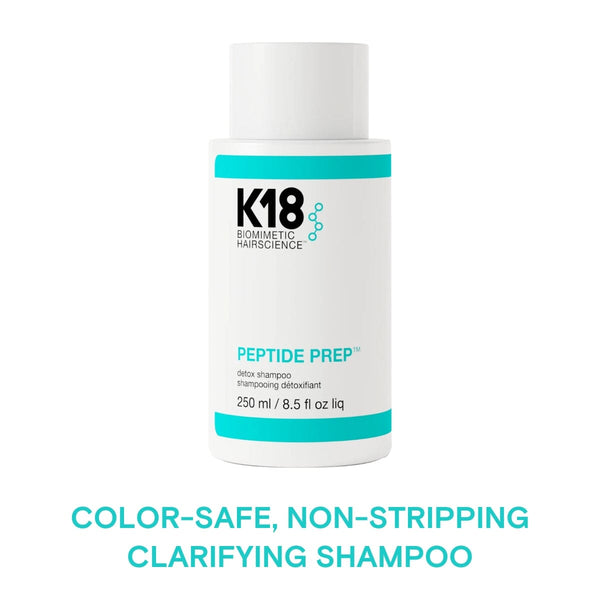
Cleanse → K18 Peptide Prep Detox Shampoo — removes buildup so K18 can penetrate fully

-
Treat → K18 Leave-In Molecular Repair Hair Mask — 4 minutes, no rinse

-
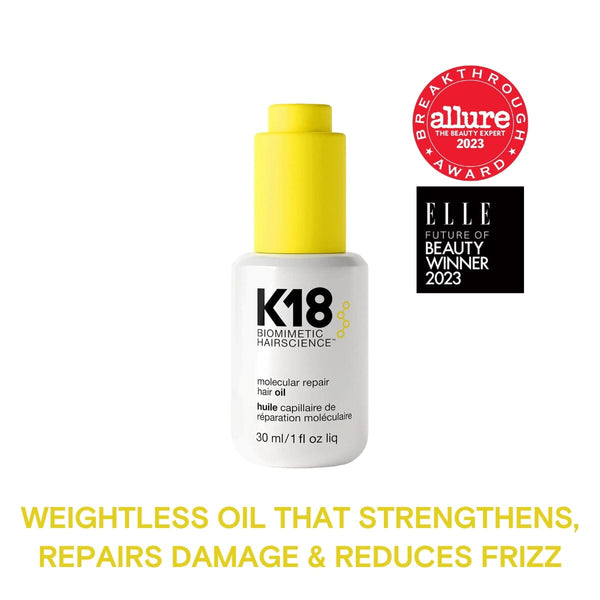
Finish → K18 Molecular Repair Hair Oil — applied post-wait, adds shine and frizz control without silicones

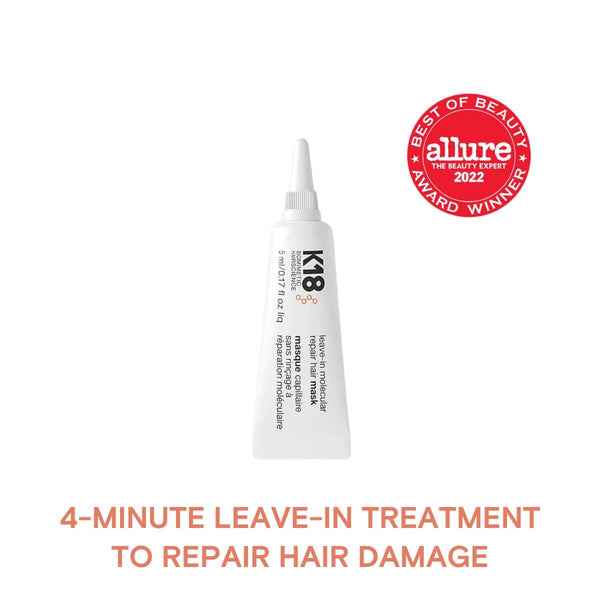
New to K18 and want to try before committing to a full-size? The K18 Leave-In Molecular Repair Hair Mask 5ml trial size is an ideal low-risk entry point — it's enough for 2–4 full uses depending on your hair length, and it lets you experience the results before investing in larger sizes.

Not sure where to start? Shop the full K18 Collection on HairMNL — including the 5ml trial size for first-timers, the 15ml everyday size, and the complete K18 system. Free shipping available on qualifying orders.