Your conditioner beads off your hair like water off a freshly waxed car. You deep condition every week and your hair still feels dry inside. You've tried every mask — rich, creamy, protein-packed — and your hair just feels heavier and limper than before. Nahihirapan mag-absorb ng moisture ang buhok mo. And if you live in Metro Manila, you've probably also noticed that same hair frizzing up in the humidity twenty minutes after you step outside.
This is textbook low porosity hair — and the reason your routine isn't working is that you've been following advice written for a different hair type entirely. This guide skips the definitions and goes straight to the products: what to use, in what order, and exactly where to buy them in the Philippines. Everything recommended below is chosen specifically for this hair type — you can browse the complete range anytime in the For Low Porosity Hair collection.
What low porosity hair actually means (and why the usual advice fails you)

Low porosity hair has cuticles that lie flat and tightly packed against the shaft. Water and product don't absorb — they bead up and sit on the surface. Think of each strand as parang nakasuot ng coat — sealed at every layer, resistant to anything trying to get in.
Here's the paradox that Philippine weather creates: because your hair resists moisture absorption during your shower, the moisture that does collect sits on top of the shaft rather than inside it. Manila's average relative humidity runs between 60–85% year-round (according to PAGASA climate data), peaking July to September. That ambient moisture activates the surface moisture on your strands and creates frizz — not from dryness, but from exposure. Your hair is simultaneously moisture-blocked and humidity-reactive.
The float test is the quick check: place a strand of clean, product-free hair in a glass of still water and wait 2–4 minutes. If it floats near the surface, your cuticles are sealed tight. Low porosity. For a deeper explanation, read our guide on how to know if you have low porosity hair.

What this means for your product choices: heavy oils, thick protein masks, and silicone-rich conditioners will not penetrate. They'll sit on top of your cuticles, layer on top of each other, and create the dullness, weight, and "limp at walang volume kahit na-condition" feeling that low-po hair is known for. What works instead: lightweight humectants, heat activation, and the right sequence of application — which is exactly what every product section below addresses.
Step 1 — Clarify first (the step most guides skip)

Low porosity hair accumulates product buildup faster than any other hair type. Because nothing absorbs properly, every shampoo, conditioner, and leave-in you apply over days and weeks simply stacks on the hair shaft. Buildup creates a physical barrier that makes moisture penetration even harder — turning a manageable situation into a frustrating cycle of dull, stiff, unresponsive hair.
A clarifying shampoo is the mandatory reset. Use it every 2–3 weeks — before anything else — to strip that accumulated buildup from the cuticle surface and start with a genuinely clean slate. In Metro Manila, if you use any leave-in products daily, expect to need this reset more often: sweat, humidity, and product residue layer up on sealed low-po cuticles faster than they would in a drier climate.
A critical clarification: clarifying does not mean drying out your hair. A good clarifying shampoo resets the scalp and hair shaft; your moisturizing routine follows immediately after. The clarify step makes everything else work better — it is not a punishment, it is the foundation.
Browse the full range of clarifying shampoos on HairMNL to find the right option for your scalp and hair condition.
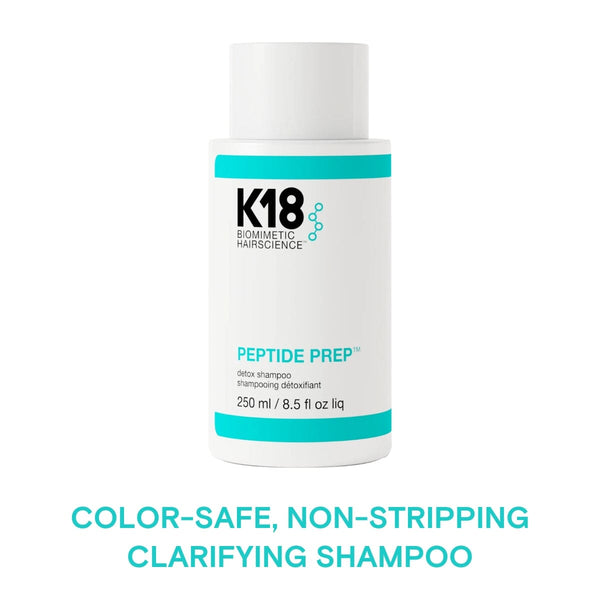
K18 Peptide Prep Detox Clarifying Shampoo 250ml (₱2,400) is the clarifying reset this step is built around. It is a color-safe, non-stripping detox formula built on the K18PEPTIDE™, tested to remove up to 99% of product buildup, 95% of sebum, and 76% of copper in a single wash — and it specifically targets the metals that tap and hard water deposit on hair (nickel, lead, zinc, iron), a common source of dullness on sealed low-po cuticles. The pH-optimized lather clears accumulated film without the drying trade-off older clarifying formulas force, leaving the cleanest possible canvas for the leave-in and oil steps below. Use it on your reset day every 2–3 weeks, then follow immediately with your regular conditioner and the heated-towel step below so the freshly cleared cuticles actually receive the moisture.
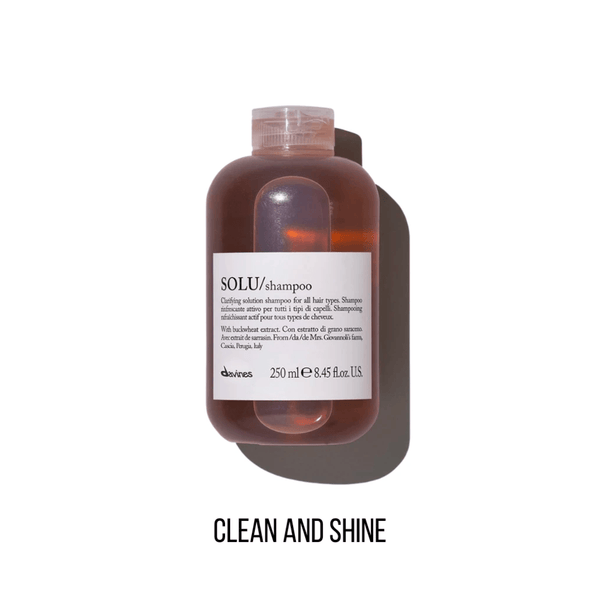
Davines SOLU Shampoo: Clarifying Solution Shampoo for All Hair Types 250ml (₱1,550) is the Davines counterpart for this step — the SOLU line is Davines' clarifying family, a deep-cleansing, sulfate-free formula that lifts accumulated product film off sealed low-po cuticles without stripping the scalp.
Step 2 — The right shampoo for low porosity hair (lightweight, not moisturizing)

This is the most counter-intuitive rule in low porosity hair care: your everyday shampoo should be lightweight and mildly hydrating — not a heavy "nourishing" or "intense repair" formula. Shampoos marketed to very dry or severely damaged hair add weight and coating that low porosity cuticles cannot absorb. They just pile on.
What to look for instead: hydrolyzed proteins (small molecular weight that can sneak past flat cuticles), humectants like glycerin that draw water in without depositing heavy film, and sulfate-free formulas that maintain the moisture your conditioner puts in. Skip anything with coconut oil listed high in the ingredients — it's too large a molecule for sealed cuticles and is one of the fastest ways to create buildup.
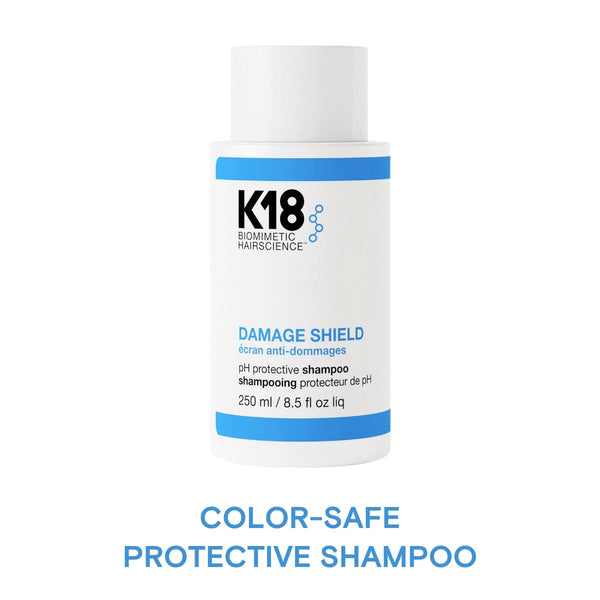
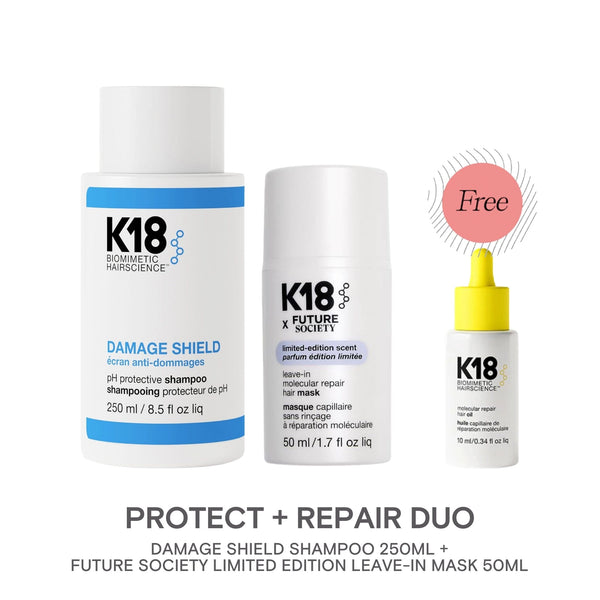
K18 Damage Shield PH Protect Repair Shampoo (part of the K18 Damage Shield PH Protect Repair Shampoo & Limited Edition Mask x Future Society Duo, ₱7,100 for the set) is a pH-optimized, sulfate-free formula specifically engineered to cleanse without disrupting your hair's acid mantle. The logic for low porosity hair: the acidic pH keeps cuticles lying flat, which reduces surface friction and minimizes frizz. The K18PEPTIDE™ delivers active repair during the wash step itself. The set includes the K18 Limited Edition Molecular Repair Mask 50ml, making it excellent value if you're building a complete low-po routine at once.
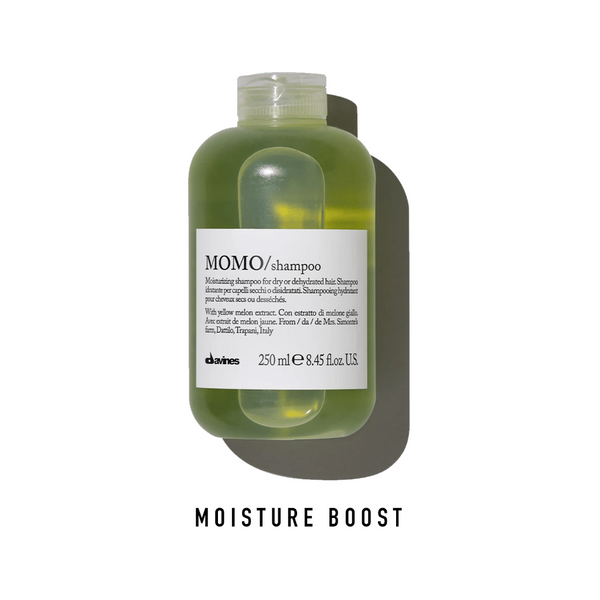
Davines MOMO Shampoo: Moisturizing Shampoo for Dry or Dehydrated Hair (from ₱1,550) is the Davines counterpart in this step: a sulfate-free, lightweight moisturizing wash built for dehydrated hair. Its hydrating actives work at the surface without depositing the heavy film that "intense repair" formulas leave on sealed cuticles — exactly the lightweight-but-hydrating balance low porosity hair needs.
"Been using Davines since the pandemic!!" — Jam Babas, 5★, April 2026, via Judge.me
For more options in this category, browse sulfate-free shampoos Philippines.
Step 3 — Conditioner for low porosity hair (apply with heat, use the LCO method)

The single biggest game-changer for low porosity hair is not a product — it's heat. Here's exactly how to use it:
- Apply your conditioner to wet hair in the shower.
- Place a heated towel (microwave a damp towel for 20–30 seconds) or a silicone shower cap over your hair.
- Leave it on for 5–10 minutes.
- Rinse thoroughly.
The warmth raises the cuticle just enough to let the conditioner actually penetrate — instead of sitting on the surface and coating your strands with product that adds zero moisture inside. This one technique can transform your results more than switching products.
The LCO method is the right layering sequence for low porosity hair. LCO stands for Liquid → Cream → Oil. Apply water or a water-based leave-in first (thinnest layer), then a lightweight cream, then finish with a very lightweight oil (not coconut) as the final seal. The order matters twice over: low porosity hair cannot push moisture through dense layers, and oil applied last locks in what your liquid and cream deposited instead of blocking it at the surface. Layer thin to rich, every time.
What to avoid: heavy protein masks, coconut oil-infused conditioners, and anything marketed as "intense repair" for severely damaged hair. These are formulated for high-porosity hair with open, porous cuticles. On sealed low-po strands, they coat rather than penetrate — the exact problem you're trying to solve.
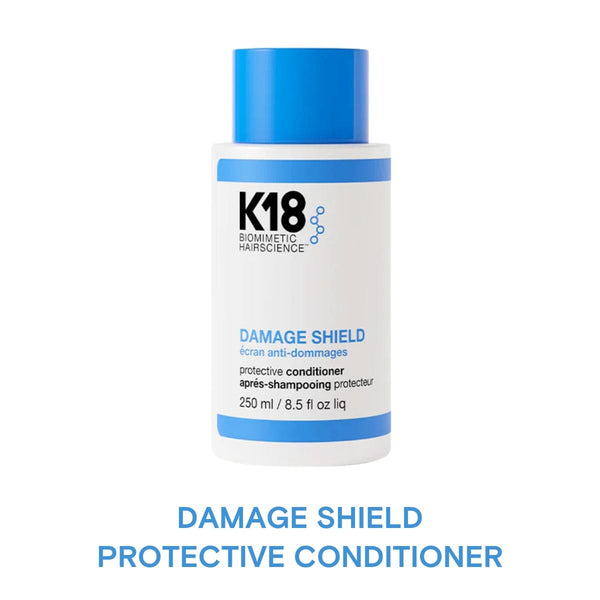
K18 Damage Shield pH Protective Conditioner 250ml (₱2,400) is a pH-protective, lightweight conditioner from K18 with no silicones and no heavy proteins. It reinforces the acid mantle that encourages cuticle lay-flat, which is the core structural challenge of low porosity hair. The K18PEPTIDE™ is present here too, delivering active repair during the conditioning step. Apply it with the heated towel technique above for best results.

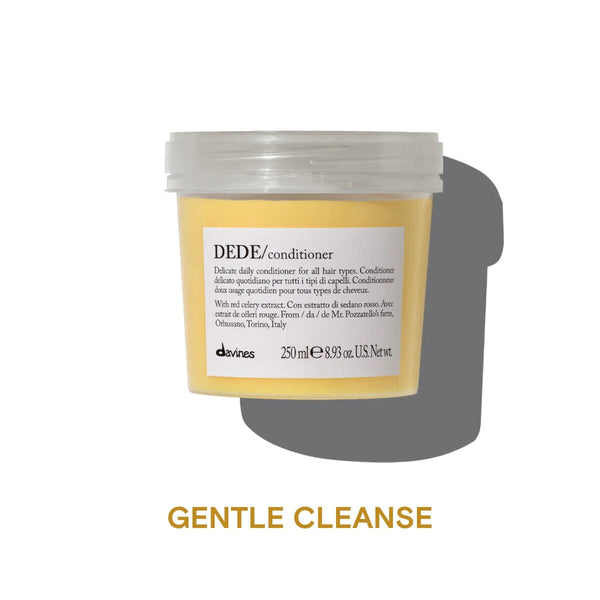
Davines DEDE Conditioner: Delicate Daily Conditioner for All Hair Types 250ml (₱1,600) is the Davines pick for this step: a delicate, daily-weight conditioner that detangles and softens without the rich butters and heavy silicones that sit on top of low porosity strands. Its light formula is ideal for frequent washing in the Philippine climate — apply it with the heated-towel technique above so the conditioning agents penetrate instead of coating.
"As someone who has dry/frizzy hair over this climate, this mask literally healed my hair and nourished it. It left my hair really smooth and 'bagsak'..." — Jessica Lemu, 5★, March 2026, via Judge.me
That "bagsak" result — hair that falls smoothly and hangs straight rather than sitting puffed at the surface — is exactly what proper moisture penetration produces on low porosity hair.
For more leave-in options to pair with your conditioner step, see leave-in conditioners for Filipino hair.
Step 4 — Leave-in treatments that won't weigh down low porosity hair

Leave-ins are the riskiest product category for low porosity hair. They sit on your strands from wash day until your next shampoo — if they're the wrong formula, they build up continuously and create that perpetually greasy-but-dry feeling that makes low-po hair so frustrating to manage.
The rule: your leave-in must be water-based or heat-activated, and it should go onto soaking-wet hair (not towel-dried) so water acts as the carrier. Most creamy, butter-rich leave-ins are designed for high-porosity hair. On your hair, they just coat.
The exception — and the hero product for this hair type — is K18.
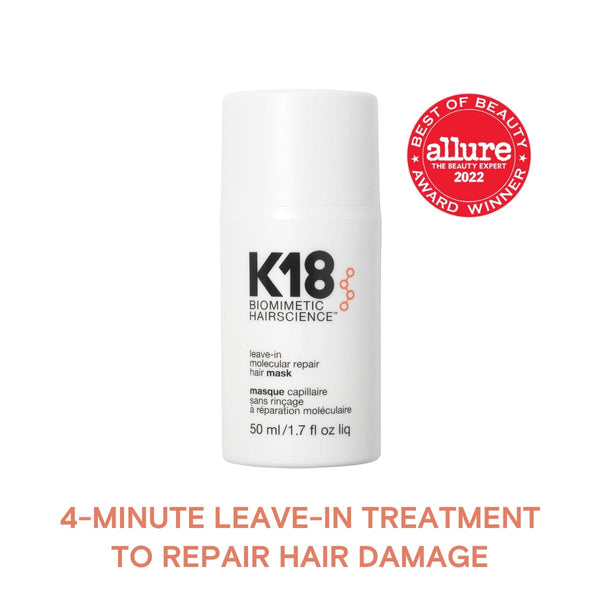
K18 Leave-In Molecular Repair Hair Mask uses patented K18Peptide™ technology, a bio-mimetic peptide chain that is small enough to penetrate even the most tightly sealed cuticle. This is not a surface coating. The K18Peptide™ reconnects broken polypeptide chains inside the hair cortex — it works at the level where all hair, regardless of porosity, is structurally the same. The molecular weight is the key reason this works specifically for low porosity hair when heavy protein masks don't.
Available in 5ml (₱900) for first-time buyers — try it here before committing to the larger size — and 15ml (₱2,000) for regular use. Both have confirmed stock. The 50ml is currently out of stock; in the meantime, the K18 Damage Shield PH Protect Repair Shampoo & Limited Edition Mask x Future Society Duo (₱7,100) includes a 50ml Limited Edition Mask with the same K18Peptide™ technology.

How to apply K18 correctly for low porosity hair:
- Shampoo and condition as normal.
- Towel-dry hair — not dripping wet, not fully dry. Damp towel-dried is the target.
- For low porosity hair specifically: press a warm towel against your hair for 30 seconds before applying K18. The warmth helps the cuticle accept the treatment.
- Apply K18 evenly through hair. Wait 4 minutes. Do not rinse.
- Style as usual.
"Holy Grail indeed for those with bleached or damaged colored hair. Though very pricey but if you're desperate to repair your hair, it's worth every drop." — qq, 5★, April 2026, via Judge.me
"It really maintained my treated hair straight and shiny. Sooo happy!" — Krizia Tolentino, 5★, March 2026, via Judge.me
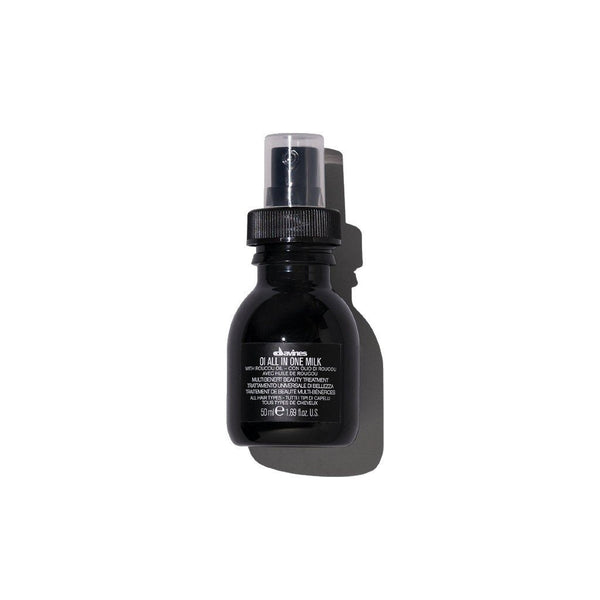
Davines OI All in One Milk: Multi-Benefit Beauty Treatment 50ml (₱880) is the lightweight alternative leave-in from Davines, a B-Corp certified Italian professional haircare brand. Infused with roucou oil from the Amazon — lighter in molecular structure than argan or coconut oil — it delivers 11 benefits including heat protection, frizz control, and humidity resistance. Apply to damp hair before blow-drying or air-drying. At ₱880 for 50ml, it is also the most accessible entry point in this routine.
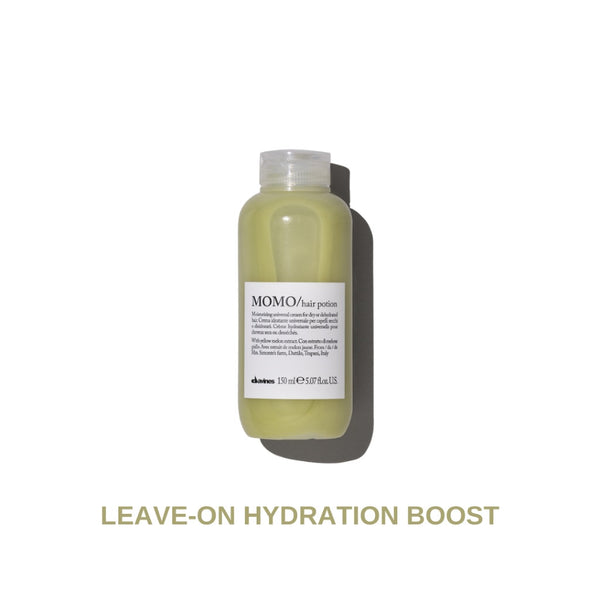
Davines MOMO Hair Potion: Moisturizing Leave-On Cream for Dry or Dehydrated Hair 150ml (₱1,750) is the cream layer of your LCO sequence in leave-in form — a moisturizing leave-on cream light enough for low porosity hair when used sparingly on damp hair. Work a small amount through mid-lengths and ends after your liquid leave-in and before your sealing oil. On low-po hair, less is more: a coin-sized amount covers shoulder-length hair.
For more bond-repairing leave-in options, browse the bond builders collection.
Step 5 — The right hair oil for low porosity hair (lighter than you think)

Heavy oils are the fastest way to undo everything your wash-day routine accomplished. Coconut oil and castor oil — two of the most recommended oils in general hair care content — have large molecular structures that cannot penetrate low porosity cuticles. They coat the outside of the shaft and create a buildup that is notoriously difficult to remove, leaving hair that looks unwashed 20 minutes after washing and feels heavy regardless of how much you've moisturized.
For low porosity hair, oil comes last in the LCO sequence — after water-based products and leave-ins — as a sealant. You are sealing in the moisture your conditioner and leave-in deposited, not trying to push more product in. Used this way, a lightweight oil is one of the most powerful tools in a low-po routine. Used wrong (as a pre-poo, as the first product, in large quantities), it actively makes things worse.
The oils that work for low porosity hair: jojoba, lightweight argan in small amounts, and roucou (the core ingredient in the Davines OI line). These have comparatively smaller molecular structures that work well on the surface without clogging.
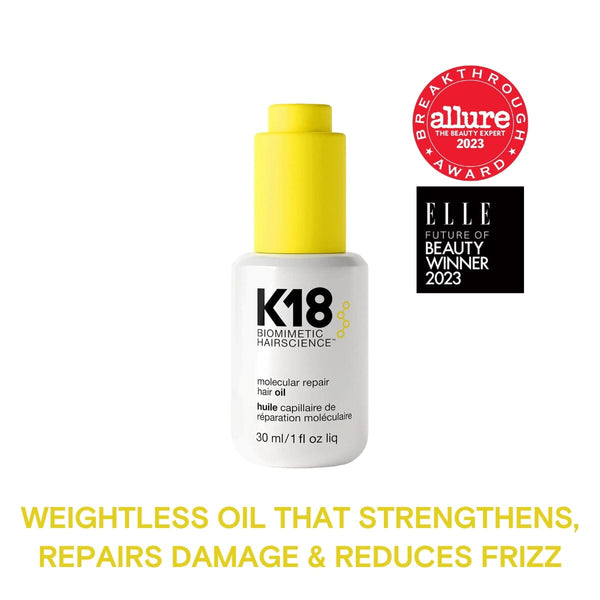
K18 Molecular Repair Hair Oil is specifically engineered to work after the K18 Leave-In Mask, completing the K18 repair routine. Its formula uses avocado oil, sunflower oil, hemisqualane, and squalane — all lightweight, non-greasy ingredients that deliver 24-hour frizz control and heat protection up to 232°C, without loading down sealed low-po cuticles. Available in a 4ml (₱800) travel size for first-timers, a 10ml (₱2,000) for regular use, and a 30ml (₱4,100) full size — the best value per ml once the oil has earned its place in your routine.
"Definitely guaranteed a great hair day when I apply this product on my hair before blow drying it... it also has this extra layer of protection." — Denise Campos, 5★, April 2026, via Judge.me
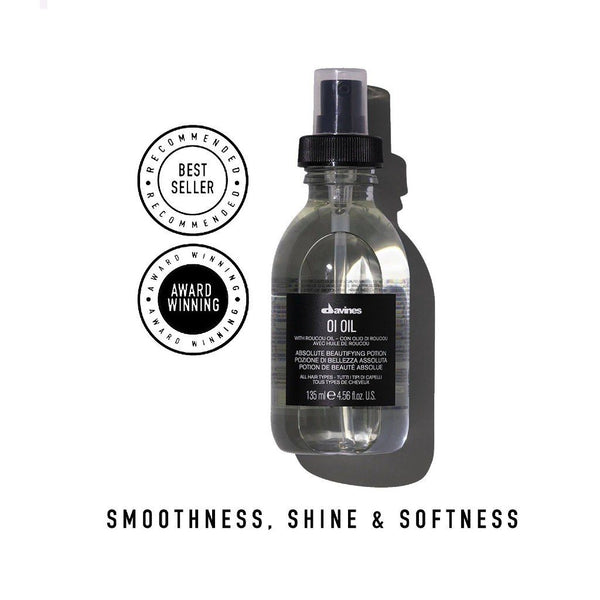
Davines OI Oil: Absolute Beautifying Potion with Roucou Oil (from ₱850; 50ml at ₱1,400) is the Davines sealing oil for this step, built on roucou oil from the Amazon — a comparatively small-molecule oil that finishes light instead of coating. It adds shine and humidity protection without blocking the moisture your liquid and cream layers just deposited. One to two drops through mid-lengths and ends is enough.
Browse the full hair oils and serums collection for additional options.
Low porosity hair routine for the Philippines — a simple weekly schedule
Pull everything together into a practical schedule. The goal is not to wash every day (which strips the moisture your routine worked to get in), but to hit each step in the right sequence on the days you do wash.
| Day / Frequency | Steps |
|---|---|
| Every 2–3 weeks (reset day) | Clarifying shampoo → lightweight conditioner with heated towel trick → K18 Leave-In or Davines OI Milk → seal with K18 Hair Oil |
| Regular wash days | K18 Damage Shield Shampoo (from the duo) → K18 Damage Shield Conditioner or Davines DEDE Conditioner with heated towel → K18 Leave-In Mask or OI Milk → K18 Hair Oil to seal |
| Mid-week refresh | Light water mist or plain water spritz on dry or damp ends. Skip heavy creams and butters entirely. |
Philippine seasonal note: During rainy season (June–October), humidity is at its peak and your hair may already be absorbing ambient moisture throughout the day. Go lighter on the sealant oil step — one or two drops is enough. During dry season (January–April), the sealant step becomes more critical; the drier air will pull surface moisture off your strands faster, and a proper oil seal keeps your wash-day results lasting longer.
This routine works with your hair's characteristic, not against it. Low porosity hair is not broken — it is sealed. Your job is to open the door briefly with heat and the right lightweight formulas, deposit moisture, and close it again with a seal.
For the full range of treatments to build your routine around, explore the hair treatment collection.
Ready to build your low porosity routine? Start with the products confirmed to work for this hair type — browse the full For Low Porosity Hair collection at HairMNL.