
You came here because you want to stop frying your hair. Here's the short answer: most people apply heat protectant at the wrong time, on the wrong hair state, and skip sections that need it most. This guide shows you exactly how to apply heat protectant — step by step — so every pass of your iron or blow dryer actually protects instead of damages.
If you've ever heard a faint sizzle when your flat iron glides through, that's the sound of moisture flash-evaporating. That sound is damage. This guide fixes that.
What Does a Heat Protectant Actually Do?
Flat irons and curling irons typically reach temperatures between 180°C and 230°C (360°F–450°F). At those temperatures, unprotected hair protein begins to break down — your cuticle lifts, moisture escapes, and your strands become brittle over time.
A heat protectant works by:
- Forming a thermal barrier on the hair shaft that slows heat transfer
- Sealing the cuticle so moisture stays in during styling
- Reducing friction between the tool plates and your hair
- Adding slip so your flat iron glides in fewer passes — and fewer passes means less damage
The key word is barrier. It doesn't make heat harmless — it gives your hair time to survive it.
Browse the full range of heat protectants at HairMNL to find the right formula for your hair type.
The Number One Mistake: Applying It Wrong
Most people spray their heat protectant on and immediately reach for the iron. That's the mistake. Here's what actually needs to happen.
Step 1: Start on Towel-Dried or Damp Hair (for Blow-Drying)
If you're blow-drying first, apply your heat protectant while hair is still damp — not soaking wet, not completely dry. Damp hair is porous and absorbs the product properly.
The sizzle test: If your hair sizzles when the dryer or iron hits it, your hair is still too wet and the moisture is flash-boiling. That steam is not your product working — it's your hair reacting to direct heat damage.
Step 2: Section Your Hair, Then Spray
Don't blast your whole head with one sweeping spray. Divide your hair into at least four sections — top, bottom, left, right. Spray each section from approximately 15–20 cm away, holding the bottle upright for an even mist, not a soaked clump.
The most common miss: people spray only the top layer. The under-layers are the ones in direct contact with the iron plates.
Step 3: Comb It Through
After spraying each section, run a wide-tooth comb or your fingers through it. This distributes the product from root to tip instead of leaving it concentrated in one spot. Even coverage equals even protection.
Step 4: Let It Set Before You Iron
For flat ironing or curling on mostly-dry hair: apply a light mist, comb through, and wait 60–90 seconds before applying heat. This allows the heat-protective polymers to settle and form their barrier on the shaft. If you iron immediately over a freshly-applied product, you risk creating steam inside the hair — which actually accelerates cuticle damage.
This is why that sizzle sounds wrong. It is.
Step 5: Do Not Over-Saturate
More is not more. Overloading heat protectant can weigh hair down, create buildup on your iron plates, and give a false sense of security at very high temperatures. No product protects above 230°C. A light, even mist is all you need.
Which Formula Should You Use?
Not all heat protectants are the same. The right format depends on your hair type and the tool you're using.
Blow-Dry Fluids — Best for: All Hair Types, Pre-Blow-Dry Step
Blow-dry fluids coat each strand before the dryer touches it, cutting down drying time while shielding against heat. They're especially effective for Filipino hair types that tend toward thickness and frizz in humidity.
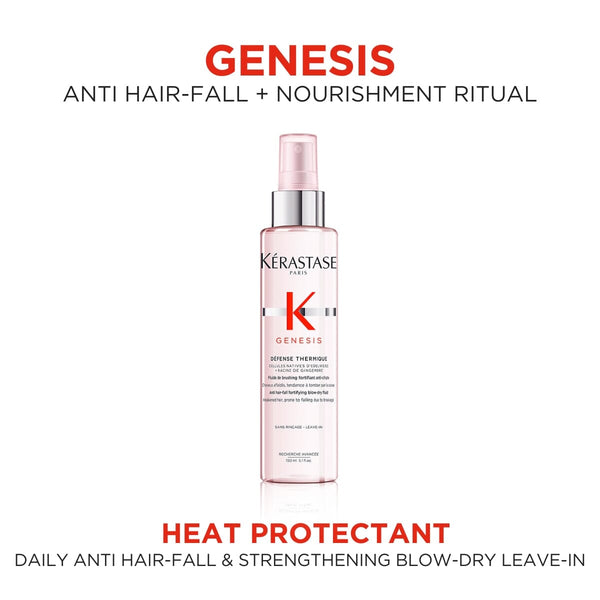
Kérastase Genesis Anti Hair-Fall Fortifying Blow-Dry Fluid
A dual-purpose blow-dry fluid that fortifies weakened strands while protecting them from heat. Ideal for hair that is prone to breakage or thinning — it works at the root to strengthen the fiber before heat is applied. Apply to towel-dried hair before blow-drying.

Conditioning Heat Protectant Sprays — Best for: Fine to Medium Hair, All Hot Tools
A spray format distributes quickly across the hair shaft and dries fast, making it the most versatile option for daily styling routines.
K18 HeatBounce Conditioning Heat Protectant 118ml
Built on K18's biomimetic peptide technology, HeatBounce works below the surface — not just on it. It repairs the internal polypeptide chain as you style, meaning every pass of your iron is actively repairing damage rather than just buffering it. Protects up to 232°C. Apply to damp or dry hair before any heated tool.

Multi-Benefit Oils — Best for: Thick, Coarse, Color-Treated, or Bleached Hair
Hair oils create a secondary barrier that sprays alone cannot deliver. They're especially effective for flat-ironing sessions where iron plates are in sustained direct contact with the strand.
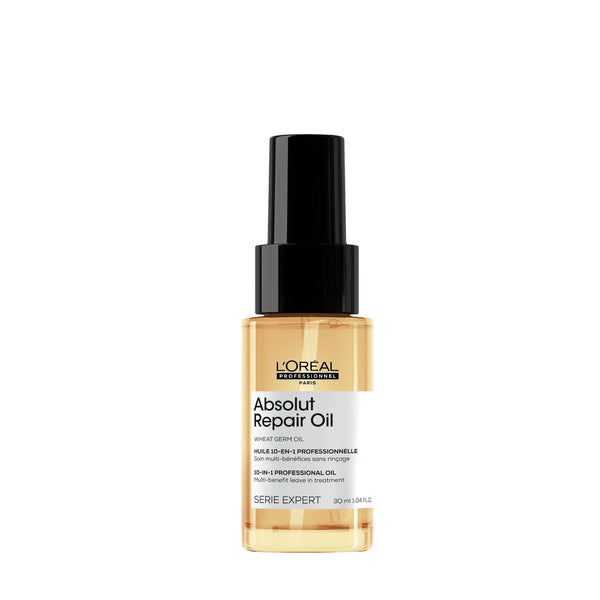
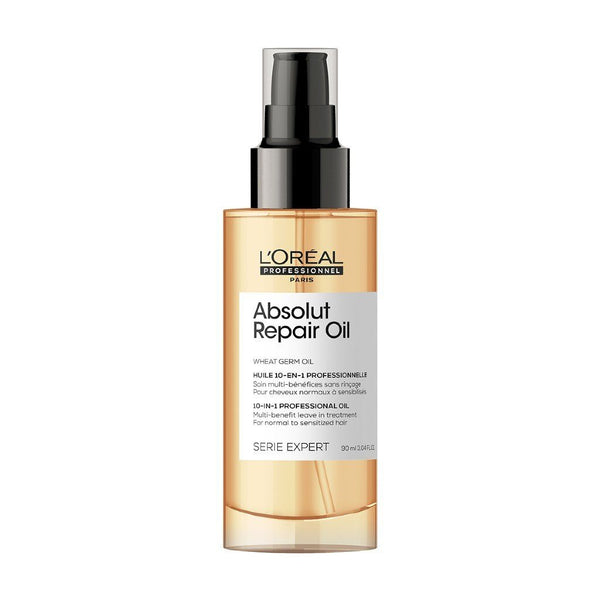
L'Oréal Professionnel Serie Expert Absolut Repair 10-in-1 Perfecting Oil
One product that covers ten functions — heat protection, detangling, frizz control, cuticle sealing, shine, and more. Excellent for bleached or repeatedly heat-styled hair. Apply 1–3 drops to damp hair before blow-drying, or 1 drop to dry hair before flat-ironing. A favorite for Filipino hair that sits at medium-to-coarse texture.

Your Flat Iron and Curling Tool: The 4 Rules
Even with the right protectant applied correctly, your tool technique matters. Whether you're using a flat iron, a straightening comb, or a 2-in-1 styler, these rules apply.
- Never flat iron over wet hair — even with protectant applied. Hair must be at least 90% dry before plates or heated teeth make contact.
- Set the right temperature: Fine hair should stay at 180°C or below. Thick or coarse hair can go up to 220°C. Going higher is not faster — it is just more damaging.
- One slow, steady pass beats three fast ones. Slow tension and consistent glide = better results with less cumulative heat exposure.
- Clean your plates or teeth regularly. Product residue on hot surfaces transfers directly onto your hair and burns at contact. Wipe down your tool after every use.
Tools That Pair Well With a Good Heat Protectant Routine
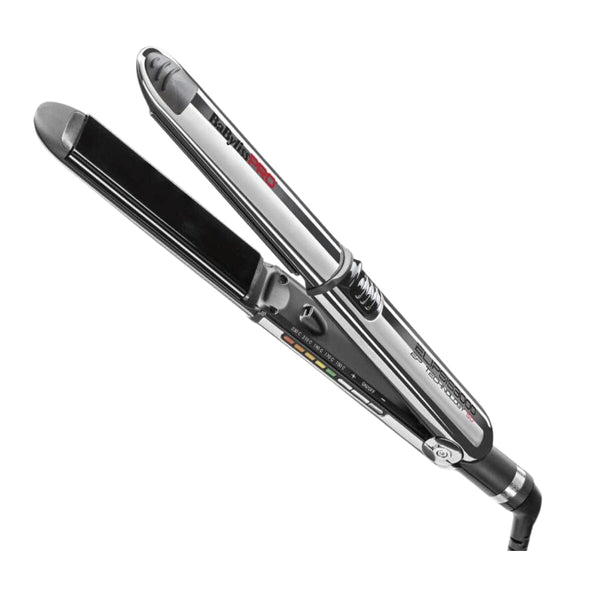
BaByliss Elipsis 3000 Styler
A professional-grade flat iron with ceramic-coated plates that distribute heat evenly, reducing the need for multiple passes. Even heat distribution is one of the most underrated factors in minimizing heat damage — and it works best when paired with a properly applied protectant.

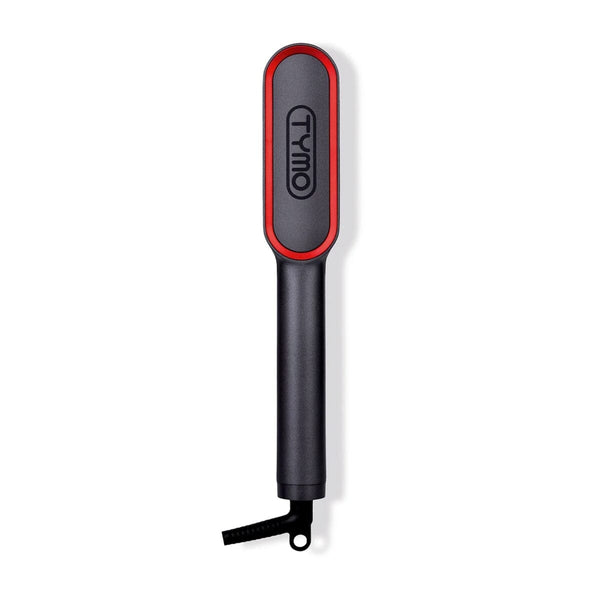
TYMO Ring Plus Ionic Straightening Comb HC-103
A heated comb-style straightener that works through the hair rather than clamping it flat. The ionic technology actively reduces frizz during styling, and the comb format is gentler on hair that is fine, thinning, or prone to breakage from clamp pressure. Because the teeth glide through individual sections rather than pressing an entire panel at once, there is less concentrated heat per strand — making it a strong pairing with a light protectant spray like the K18 HeatBounce. Apply your protectant, let it set 60–90 seconds, then run the comb through each section slowly from root to tip.

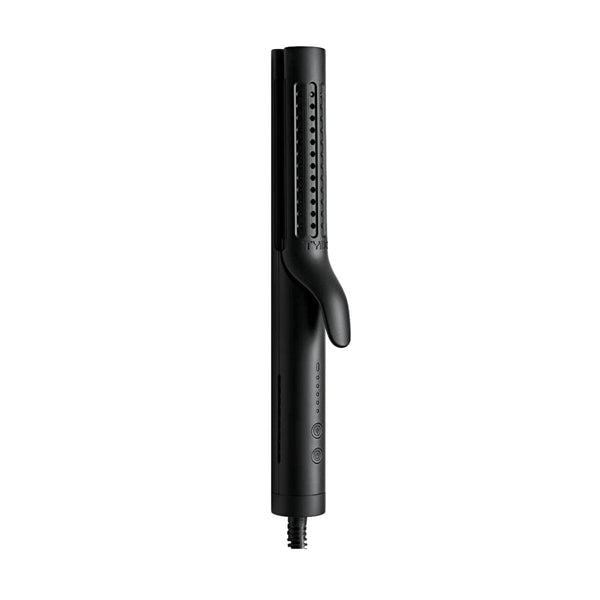
TYMO Airflow 2-in-1 Hair Curler Straightener HC-506
Switches between curling and straightening in one tool, with airflow technology that circulates heat more evenly around the strand instead of concentrating it at a single contact point. For anyone who alternates between straight and wavy styles throughout the week, this reduces total heat exposure per session — which compounds significantly over time. The airflow mechanism also means the strand is never fully sealed between two static plates, lowering the risk of uneven hot spots. Pair with the L'Oréal Absolut Repair 10-in-1 Oil — apply one drop to dry hair before styling for an added barrier on each pass.

Common Heat Protectant Mistakes to Avoid
Even when people know they should use a heat protectant, small technique errors undo most of the protection. Here are the most frequent mistakes:
- Applying to completely dry hair before flat ironing without waiting. The polymers in a heat protectant need 60–90 seconds to form a barrier. Iron immediately and you defeat the purpose.
- Skipping the underlayers. Most people only hit the top surface of their hair. The strands clamped directly between iron plates are the ones that need protection most.
- Using too much product. Heavy saturation creates steam between the plates and your hair — essentially the same damage mechanism as ironing wet hair.
- Never cleaning your tool plates. Burned product residue on plates scorches your hair at every pass. Wipe down with a damp cloth after the tool cools.
- Using the same temperature for every hair type. Fine, color-treated, or rebonded hair is more fragile and should never go above 180°C regardless of how much protectant you apply.
Frequently Asked Questions
Do you apply heat protectant to wet or dry hair?
It depends on your styling step. For blow-drying, apply to towel-dried damp hair — damp hair is porous and absorbs the product best. For flat ironing or curling, your hair should be mostly dry (at least 90%) before you apply and then use the iron. Applying to completely wet hair and ironing immediately causes the moisture to flash-boil between the plates, which accelerates damage.
How long should you wait after applying heat protectant before using a flat iron?
Wait 60–90 seconds after applying and combing through before picking up your iron. This gives the heat-protective polymers time to settle and form their thermal barrier on the hair shaft. Ironing over a freshly spritzed section creates steam inside the hair, which can lift and damage the cuticle.
Can you use too much heat protectant?
Yes. Over-saturating your hair can weigh it down, cause buildup on your tool plates, and give a false sense of security. No heat protectant protects above 230°C regardless of how much you apply. A light, even mist distributed with a comb is all that's needed.
Do you need heat protectant every single time you use heat on your hair?
Yes — every time, without exception. Each heat styling session exposes your hair to temperatures that can break down the protein structure of your strands. Cumulative damage from unprotected sessions adds up quickly, especially in the Philippine climate where humidity already stresses the hair cuticle.
What's the difference between a heat protectant spray and a heat protectant oil?
Sprays are lighter and distribute quickly, making them ideal for fine to medium hair and daily use with any hot tool. Oils create a denser secondary barrier and are better suited to thick, coarse, color-treated, or bleached hair — especially for flat-ironing sessions where plates are in sustained contact with each strand. For maximum protection, some people layer both: a light spray first, then one drop of oil on top.
Is heat protectant enough on its own, or do I also need to adjust my tool temperature?
Both matter. Heat protectant reduces the rate of heat transfer and seals the cuticle, but it cannot override an incorrect temperature setting. Fine hair should stay at or below 180°C; thick or coarse hair can go up to 220°C. Using the right temperature paired with a correctly applied protectant is significantly safer than cranking up the heat and relying on product alone.